
Human Monsters
Dehumanization and Metaphysical Threat

When I began researching dehumanization around 20 years ago, I believed that when we dehumanize people we think of them as nonhuman animals—as vermin, predators, and so on. This is the picture that I presented in Less Than Human, my first book on dehumanization. It was a commonplace view then, and it still is today.
However, there are four very significant problems with this perspective—problems that I didn’t recognize when I wrote Less Than Human.
One problem is the fact that thinking of dehumanized others as subhuman animals goes hand-in-hand with also acknowledging their humanness. Sometimes this is implicit, for instance when dehumanizers castigate dehumanized people as criminals (because only humans can be criminals) or when they humiliate them (cockroaches can’t be humiliated). Often, though, it is explicit. Dehumanizers typically alternate between describing those whom they dehumanize as nonhuman animals and describing them as human beings.
A second problem is that conceiving of others as animals doesn’t account for why they are seen as uniquely dangerous—typically, as posing an existential threat. This is particularly striking, given that dehumanized groups are often vulnerable, powerless minorities.
Third, conceiving of others as nothing more than nonhuman animals doesn’t explain the extreme violence that is meted out to them.
Finally, the idea that when people dehumanize others, they think of them as nothing more than animals doesn’t explain why these others are typically represented as monstrous beings.
Over time, I began to recognize these problems, and to work towards solving them. It took about five years of research to arrive at a satisfactory solution. I presented a sketch of my revised position in my 2016 paper “Paradoxes of dehumanization,” and more fully in my books On Inhumanity: Dehumanization and How to Resist It (2020) and Making Monsters: The Uncanny Power of Dehumanization (2021).
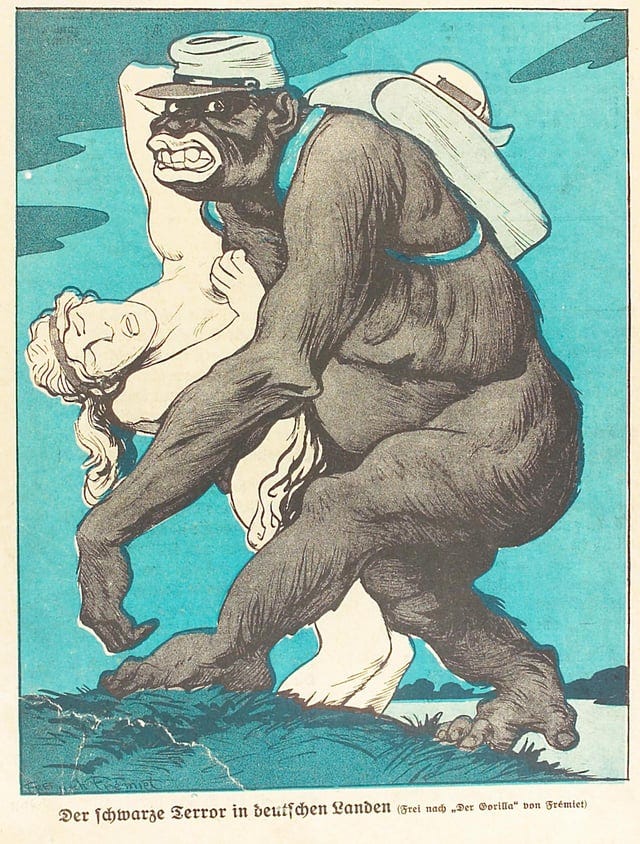
I came to the conclusion that although dehumanization often begins as the attitude that others are nonhuman animals (beasts, predators, vermin), it gives way to conceiving of them as monsters. I’ve offered a detailed explanation of how this happens in my book Making Monsters. Here, I want to focus on a psychological consequence of transforming people into monsters: the experience of metaphysical threat.
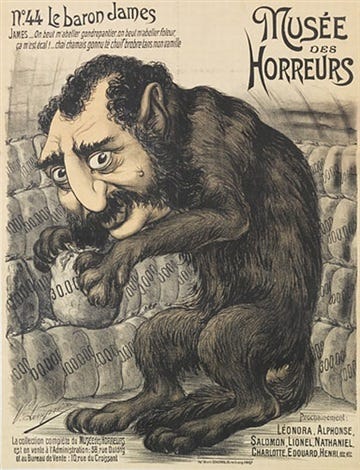
Consider the following passage from a booklet titled Der Untermensch (“The Subhuman”) published by the Nazi SS, ostensibly under the editorial direction of Heinrich Himmler himself. The “subhumans” to which the text refers are members of what the Nazis held to be inferior races—paradigmatically, Jews.
Inside of this creature lies wild and unrestrained passions: an incessant need to destroy, filled with the most primitive desires, chaos and coldhearted villainy. The subhuman thrives in chaos and darkness, he is frightened by the light. These subhuman creatures dwell in the cesspools, and swamps, preferring a hell on earth, to the light of the sun.

Although the word “monster” doesn’t appear anywhere in the text, this is obviously a description of monstrous entities.

Nazis also overly characterized dehumanized people as monsters. Werner Catel was a senior physician in the Nazis’ “euthanasia” program that resulted in the murder of thousands of disabled children. In a 1961 magazine interview, Catel described cognitively disabled children as “soulless beings” that “will never become a human being,” and he continued to describe such children as “monsters” and “massa carnis” (“lump[s] of flesh”)—a term that he borrowed from Martin Luther, who had used it four centuries earlier to describe a cognitively disabled child that he believed to be a “changeling”—a demonic being swapped for a human child by the devil.
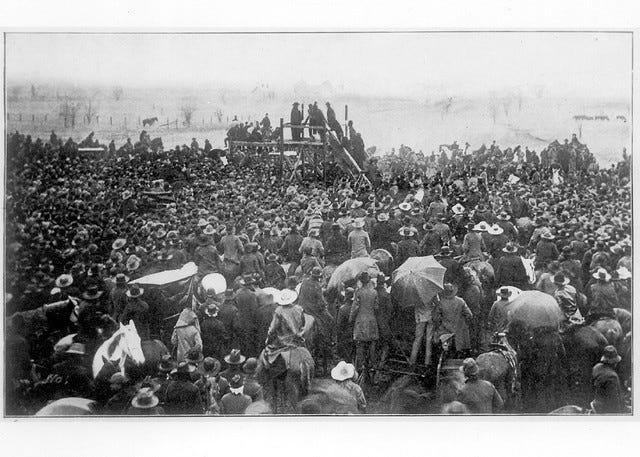
Many of the victims of racial violence in the United States were described as monsters in print media of the day. For instance, Henry Smith, an intellectually disabled African American farm worker, who was accused of raping and murdering a young child, was gruesomely tortured and then burned alive before a crowd of at least ten thousand eager spectators. The media of the day wasted no time describing him not only as an animalistic “brute,” but also an “unnatural monster,” “incarnate monster,” and “the most inhuman monster known in current history.”
It is tempting to dismiss such talk as nothing more than façons de parler. But the way that we speak is the way that we think, and the way that we think—the categories we employ and the relations that we take to hold between them—are hostage to the ideological frameworks that we acquire from our social milieux.
So, what is it to characterize a person, or a group of people, as monsters? Philosopher Jack Griffiths writes in an essay review of Lorraine Daston’s book Against Nature that:
Monsters are products of organic development or reproduction gone awry, and they violate the meant-to-be order of the organism’s ‘specific’ (species) nature, or in some cases transgress the boundary between one or more such natures...Monsters are break-downs of the proper ordering of the organic world. They are objects of horror, to be spurned, rejected, even destroyed.
Monsters have no place in the natural order because they transgress the boundaries separating natural kinds by combining mutually exclusive attributes in a single entity. As Noël Carroll puts it, the monster is typically “a composite that unites attributes held to be categorically distinct and/or at odds with the cultural scheme of things in unambiguously one, spatio-temporally discrete entity.”
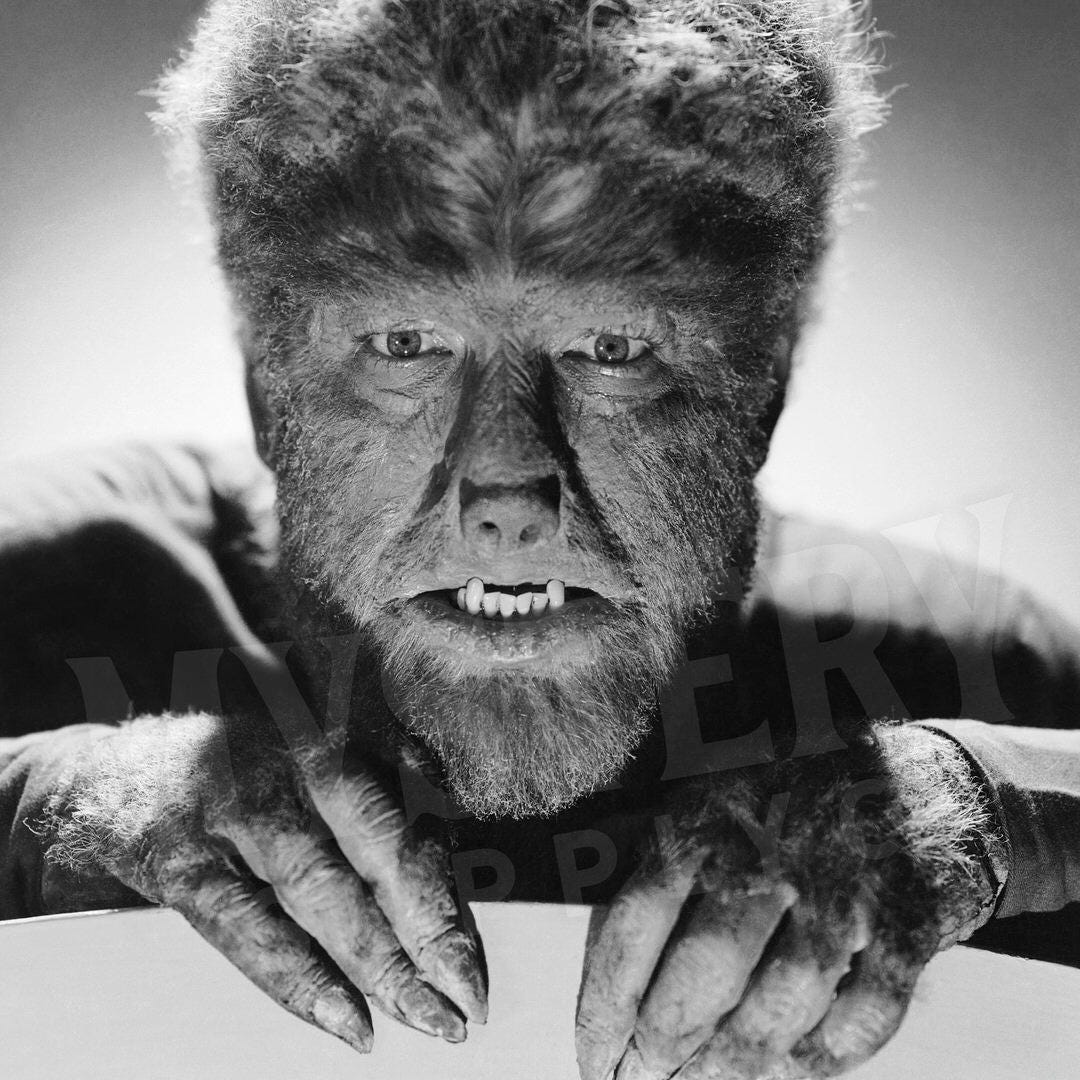
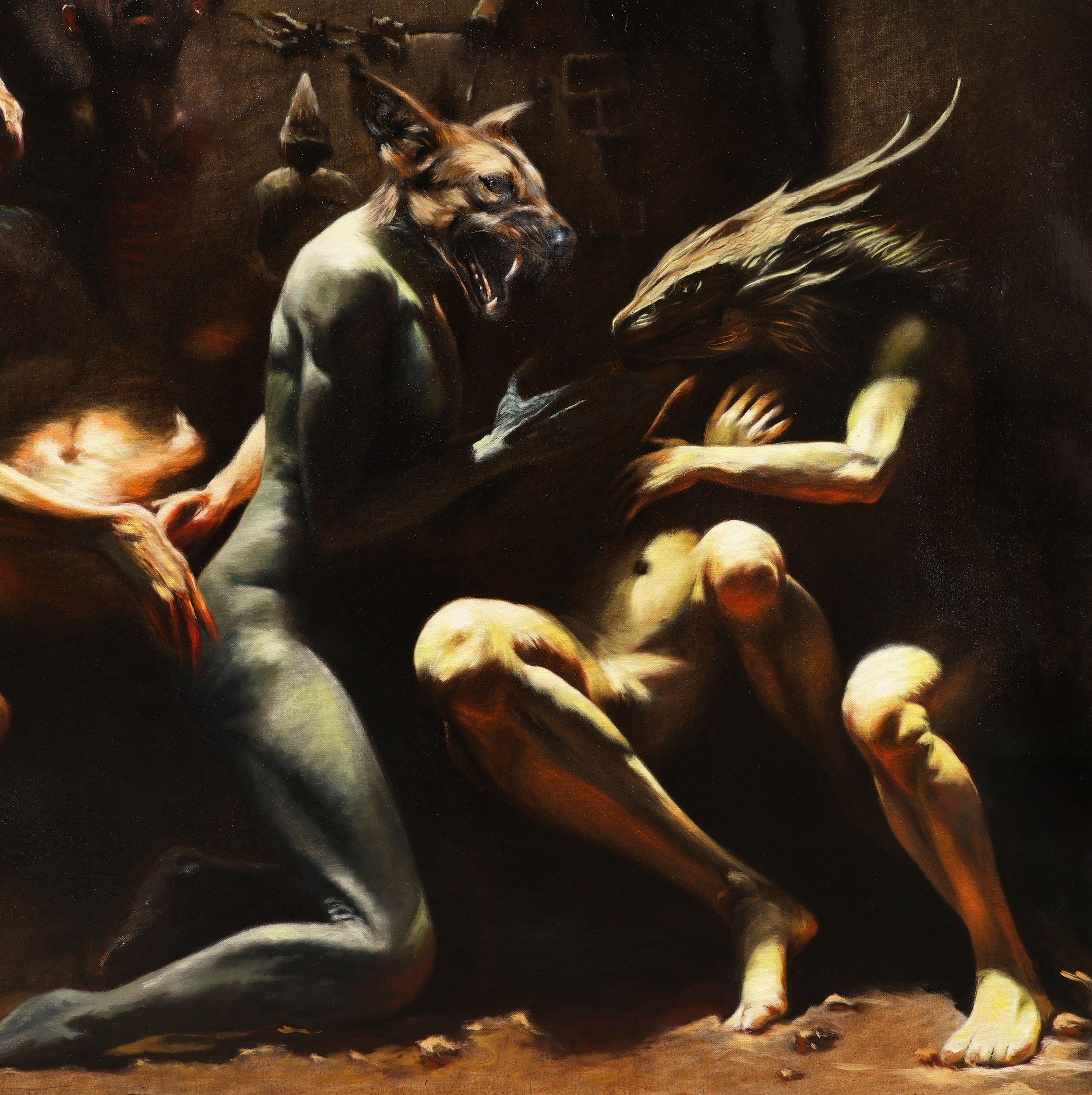
Consider the werewolf—a being that is both wolf and man. The werewolf is not part wolf and part man—for instance, lupine legs and human arms. That would be disturbing, but not conceptually impossible. However, the werewolf is fully human and also fully wolf. Similarly, movie zombies are decaying corpses, fully dead but animate and hungry, and therefore also fully alive. Werewolves and zombies are physically dangerous, predatory beings, and therefore frightening—but that they are uncanny fusions of mutually exclusive natural kinds renders them not merely scary, but horrifying.
Likewise, dehumanized people are regarded by their persecutors as simultaneously human and subhuman, which transforms them into monstrous fusion figures. The violations of the natural order exemplified by werewolves, zombies, and, I argue, dehumanized human beings, produces a feeling of what I call metaphysical threat. British horror writer Arthur Machen brilliantly conveyed the idea of metaphysical threat in a passage from his novel The House of Souls.
What would your feelings be, seriously, if your cat or your dog began to talk to you and to dispute with you in human accents? You would be overwhelmed with horror. I am sure of it. And if the roses in your garden sang a weird song, you would go mad. And suppose that the stones in the road began to swell and grow before your eyes, and if the pebble that you noticed at night had shot out stoney blossoms in the morning?
None of the items mentioned in this passage—the roses, the stones, the pebble, the pet cat or dog, are physically dangerous; and yet, they are all extremely disturbing. Machen’s imagery doesn’t elicit disgust (an affect that I think is overemphasized in the moral psychology literature), and it doesn’t evoke fear—the affective response to ordinary dangers. It evokes horror—an under-theorized psychological state.
We can make sense of this affective response by examining its cognitive underbelly.
Although “metaphysical threat” is a novel term, the phenomenon that it names has been studied, on and off, for more than a century, starting with German psychiatrist Ernst Jensch’s seminal 1906 article “On the psychology of the uncanny.” The German word translated as “uncanny” in Jentsch’s title is unheimlich. Unheimlich things are eerie, creepy, or at the extreme, horrific. They make your skin crawl.
Jentsch argued that a certain kind of disorientation is at the root of such feelings. We have the affective experience of uncanniness when presented with something that seems to belong to two incompatible categories at once. Jentsch was particularly interested in, and presented several examples of, things that seem both animate and inanimate, such as human figures in a wax museum. One’s immediate, gut-level response to well-made simulacra of human beings is to see them as human, even though one knows that they are not. The metaphysical threat response is even more marked if they move. Automata can provoke unheimlich feelings:
This peculiar effect makes its appearance even more clearly when imitations of the human form not only reach one’s perception, but when on top of everything they appear to be united with certain bodily or mental functions. This is where the impression easily produced by the automatic figures belongs that is so awkward for many people…. for example, the life-size machines that perform complicated tasks, blow trumpets, dance and so forth, very easily give one a feeling of unease.

The power of automata to elicit metaphysical threat was rediscovered more than half a century later by Japanese roboticist Masahiro Mori, and described in a short but extremely influential paper titled “The uncanny valley” (bukimi, the Japanese word translated as “uncanny,” works very much like the German unheimlich). Mori predicted that as robots (an updated iteration of Jentsch’s automata) become more human-like, we will become more and more comfortable with them, but once they are almost indistinguishable from real human beings, they will be experienced as bukimi and elicit intense aversion.
In between Jentsch and Mori, Mary Douglas’ celebrated book Purity and Danger (1966) addressed metaphysical threat antropologically. Douglas argued that beings that do not fit into a society’s framework of natural kinds are regarded as unclean, impure, defiled, and imbued with dangerous power that requires special, expert management.
A few decades later, Noël Carroll explicitly drew on Douglas’ analysis. Carroll argued that “horrific monsters”—the kind of monsters found in horror fiction and cinema—must have two features. They are physically threatening (violent, deadly, malevolent), but what is distinctive about them is that they are “cognitively threatening” because they transgress the boundaries between natural categories. Carroll’s “cognitive threat” means pretty much the same thing as my “metaphysical threat.”
Metaphysically threatening beings are both fascinating and disturbing, alluring and repellent. This extraordinary ambivalence is key for understanding the phenomenology of dehumanization, which often involves the sexual fetishization of dehumanized people. The all-to-common idea that dehumanizers simply hate, or have contempt for, or are disgusted by, those whom they regard as subhumans provides a misleading and impoverished picture of the psychology of dehumanization.
We are left with the question of why dehumanized people experienced as being so threatening—so dangerous and powerful— that extreme violence against them seems warranted in the eyes of their dehumanizers.
Dehumanized people are often accused of being criminals (typically murderers, rapists, and pedophiles), but their main crime is, in the words of historian Michael Berkowitz, is the crime of their very existence. Dehumanized people should not exist because they are ruptures in the fabric of nature. Things taken to transgress the natural order are threatening because they undermine our sense of reality. We rely on the social construction of a natural order to navigate the world. The orderly arrangement of kinds provides predictability, and allows us to make inductions that we require to remain secure and pursue our projects. As the philosopher Philip J. Nickel observes in an essay on the epistemological significance of horror:
Suppose I want to cross a parking lot safely. On the one hand there is an action to be performed, crossing the parking lot. On the other hand there are a number of related beliefs that I might have: there are no persons—or birds, or zombies—about to attack me, the surface of the parking lot will not rupture as I cross it, I am not in a nightmare induced by a demon, and so on. I have these backing beliefs implicitly and they make me feel confident and justified that my action will succeed….The beliefs express and justify our intellectual willingness to rely upon the world and on other people are generally like this.
But monstrous beings undermine this. They are harbingers of disorder, threats to the supposed moral authority of nature. As such, they are experienced as immensely disruptive, and must be constrained, incarcerated, or exterminated. When combatting monsters, no treatment—however violent—is out of bounds.
This newsletter is free, because most of the topics are too urgent to be hidden behind a paywall. But if you think that my work is worth supporting, and would like to help support it, I am always grateful for paid subscriptions.
Thanks so much for coming on the Multifaith Matters podcast in the past to discuss this specific expression of dehumanization. This has allowed me to apply it to interreligious forms of dehumanization where "the other" is seen as metaphysical threat due to their worldview.
Yes, indeed, our psychology can contort us in ways that are supposed to be unimaginable. Keep telling us.