


Ten years ago when I began to say that Trump is fascist, most of my friends thought I was being silly. Times have changed. Nowadays it’s very common for opponents of the regime to call Trump and his enablers fascists. Still, some demure, and those who invoke the fascist label often don’t have an accurate understanding of what fascism really is. They conflate fascism with totalitarianism, authoritarianism, or other anti-democratic “isms.” Fascism is authoritarian and sometimes totalitarian, but there are authoritarian and totalitarian regimes that are not fascist.
And you can’t tell who’s a fascist just by reading the label. You’ve got to look inside the box. Historically, most fascists didn’t even call themselves fascists. Hitler didn’t, and neither did Franco. Umberto Eco remarked in a famous essay that ur-facism (that is, generic fascism )
“…is still around us, sometimes in plainclothes. It would be so much easier for us if there appeared on the scene someone saying, ‘I want to reopen Auschwitz, I want the Blackshirts to parade again in the Italian squares.’ Life is not that simple. Ur-fascism can come back under the most innocent of disguises. Our duty is to uncover it and to point the finger at any of its new instances—every day and in every part of the world.”
Is the MAGA movement really fascist? I’ve compiled a list of the characteristics of fascist movements. It’s a list that the majority of fascism scholars—women and men who have spent large portions of their lives studying fascism—would agree with.
Fascism portrays itself as addressing civilizational emergency—as fascism scholar Robert O. Paxton puts it, an “overwhelming crisis beyond the reach of any traditional solutions” coupled with “a belief that one’s group is a victim, a sentiment that justifies any action, without legal or moral limits, against its enemies, both internal and external.”
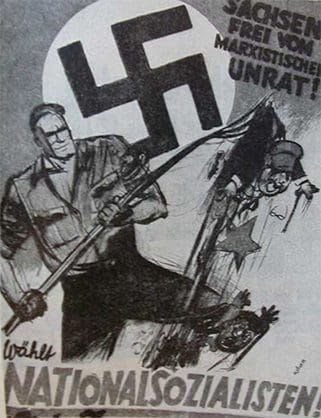
Nazi man of action 2. Fascism prioritizes action over thought. This emergency can be met only by taking decisive action that isn’t constrained by conventional moral, cultural, political norms. The ideal fascist is a culture warrior, a man of action rather than a man of reflection, a man who thinks with his gut. Umberto Eco observed that for the fascist, “Action is beautiful in itself, and therefore must be implemented before any form of reflection. Thinking is a form of emasculation.” As one Italian fascist put it, “The fist is the synthesis of our theory.”
3. Blood-nationalism is one of the most obvious expressions of the fascist attitude, which is why fascism virtually always involves one or another version of racism. Blood-nationalism is hierarchical—one’s own group in inherently superior to others and destined to rule over them. Blood-nationalism is often linked to expansionist ambitions. The supreme nation-state must have room to expand—Lebensraum in the German version, and spazio vitale in the Italian one.
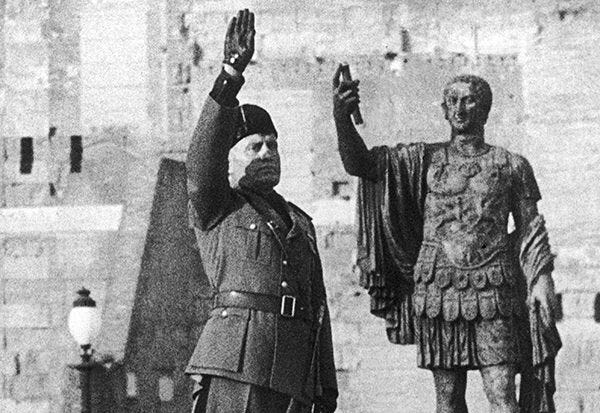
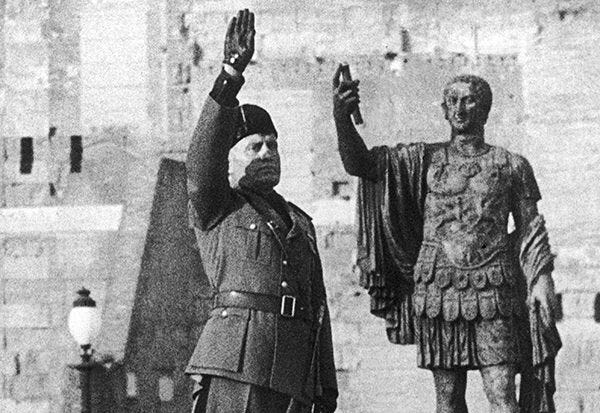
Mussolini and statue of Augustus Caesar, 1935 4. Nostalgia for a Golden Age is at the heart of fascist discourse. This is why fascist propaganda so often refers to becoming great again. Hitler wanted to christen his projected capital city (a re-built Berlin) Germania, which was the Latin name for the lands where the ancient German tribes resided. Mussolini aimed at transforming his Italian capital into a Third Rome, following the first Rome of the emperor Augustus and the second Rome of Pope Sixtus V.
But fascists do not wish to literally return to the past. Fascism is palingenetic. Fascists seek to bring about a rebirth of the nation, ushering in an unprecedented epoch of greatness.
4. The rebirth of the nation is to be brought about by heroic men with traits such as toughness, hardness, and dominance. Sociologist Simoneta Falasca-Zampoini writes that for Italian fascists, “Violence signified rebirth and renewal for the fascists… a bloody event with a purifying effect.”
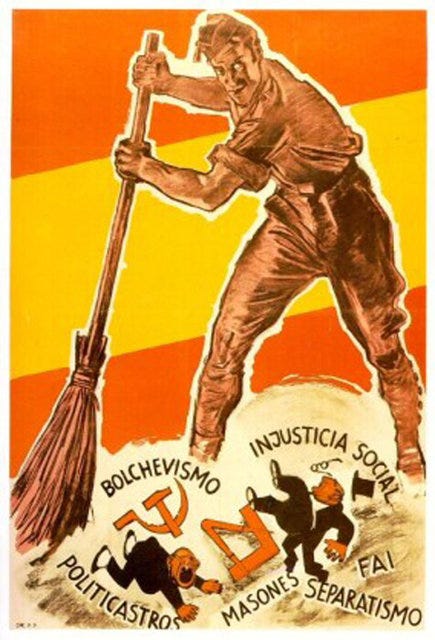
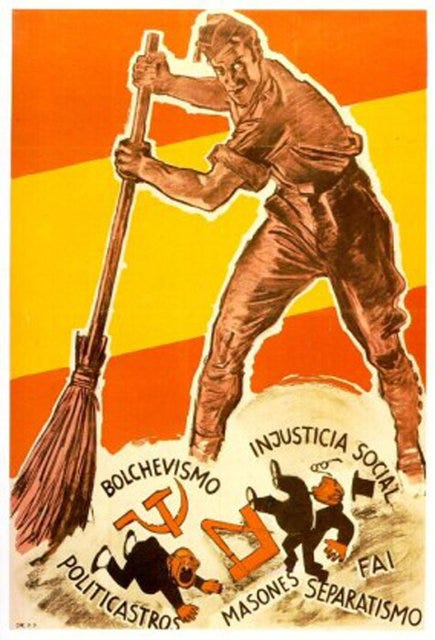
Spanish fascist image of cleansing the nation, 1936 5. Fascism is radical. It seeks to make a radical break with existing conventions. Thus, the British fascist leader Sir Oswold Mosely wrote in 1934, “The task before us is nothing less than the creation of a new civilization. Before we can really begin that task we must create a new spirit.” Fascists often describe their project as an act of purification, a purge of the nation’s human contaminants, through violence. The regime accomplishes this by expelling, incarcerating, or exterminating its real or imagined opponents.
6. Fascism is Manichean. It cleaves the world into us and them, good and evil, righteous and depraved. At its root, vision is based on the fantasy of an original natural or God-given order that was later corrupted by swarms of degenerate others—the liberals, the Jews, the immigrants, the communists, the capitalists, or whomever.
7. Fascism appeals to law and order. This has a deeper significance than a fondness for policing or getting the trains to run on time. Fascists aim at reordering the world. They strive to cleanse the world of chaos and corruption and restore it to how it should be. Thus, the Nazi economist Gottfried Feder proclaimed in the 1933 manifesto of the National Socialist party, “The will to give shape to the amorphous, the will to put a stop to chaos, to put in order a world out of joint, and to keep order as its guardians—that is the enormous task which National Socialism has set itself.”
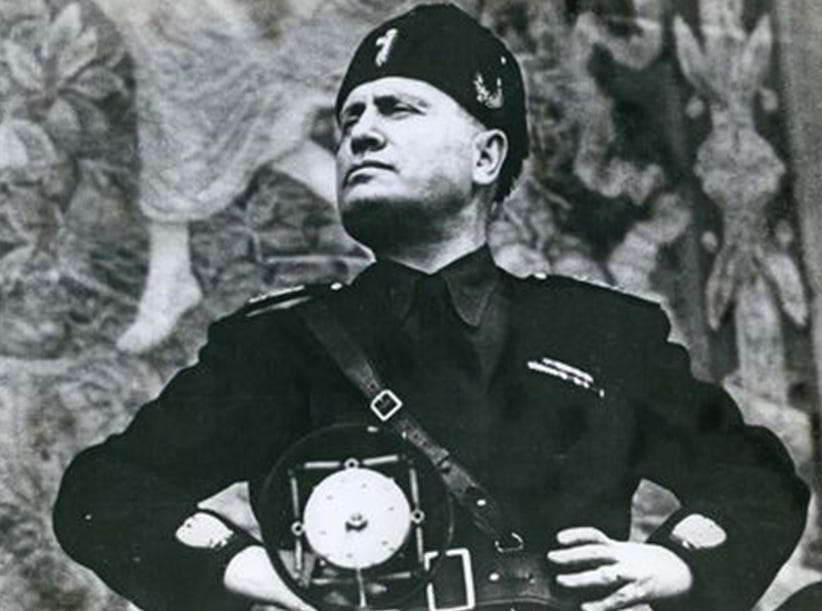
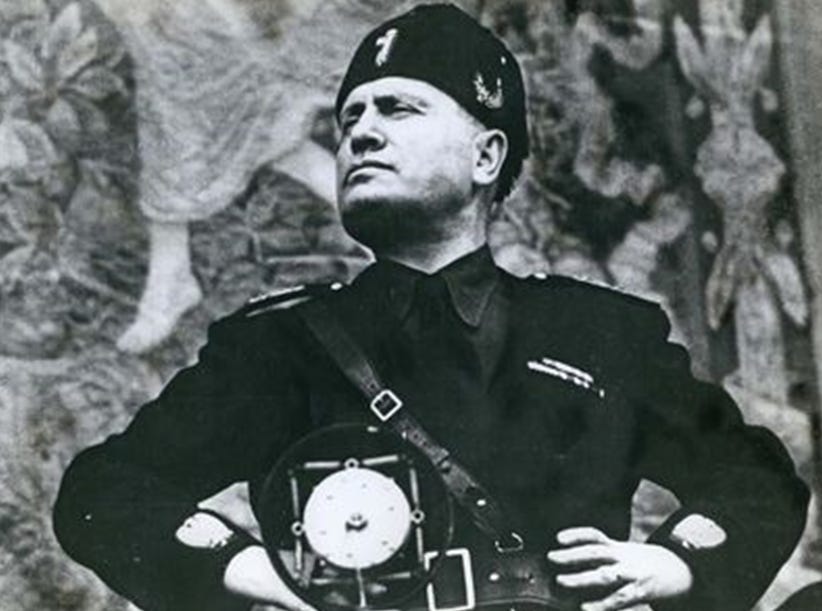
Mussolini as supreme leader 8. Fascism is autocratic. It looks to one man, a supreme leader with “a unique and mystical status as the incarnation of the people’s will and the bearer of the people’s destiny.” The leader is often regarded with quasi-religious awe by his followers and is endowed by them with traditional attributes of divinity; he is all-knowing, all-powerful, and all-benevolent, offering redemption to the masses in exchange for their unconditional devotion.
9. Given his demigod status, the leader’s subordinates must sacrifice their autonomy and subordinate themselves to his will. Loyalty to the leader is the supreme virtue and disloyalty the ultimate offense.
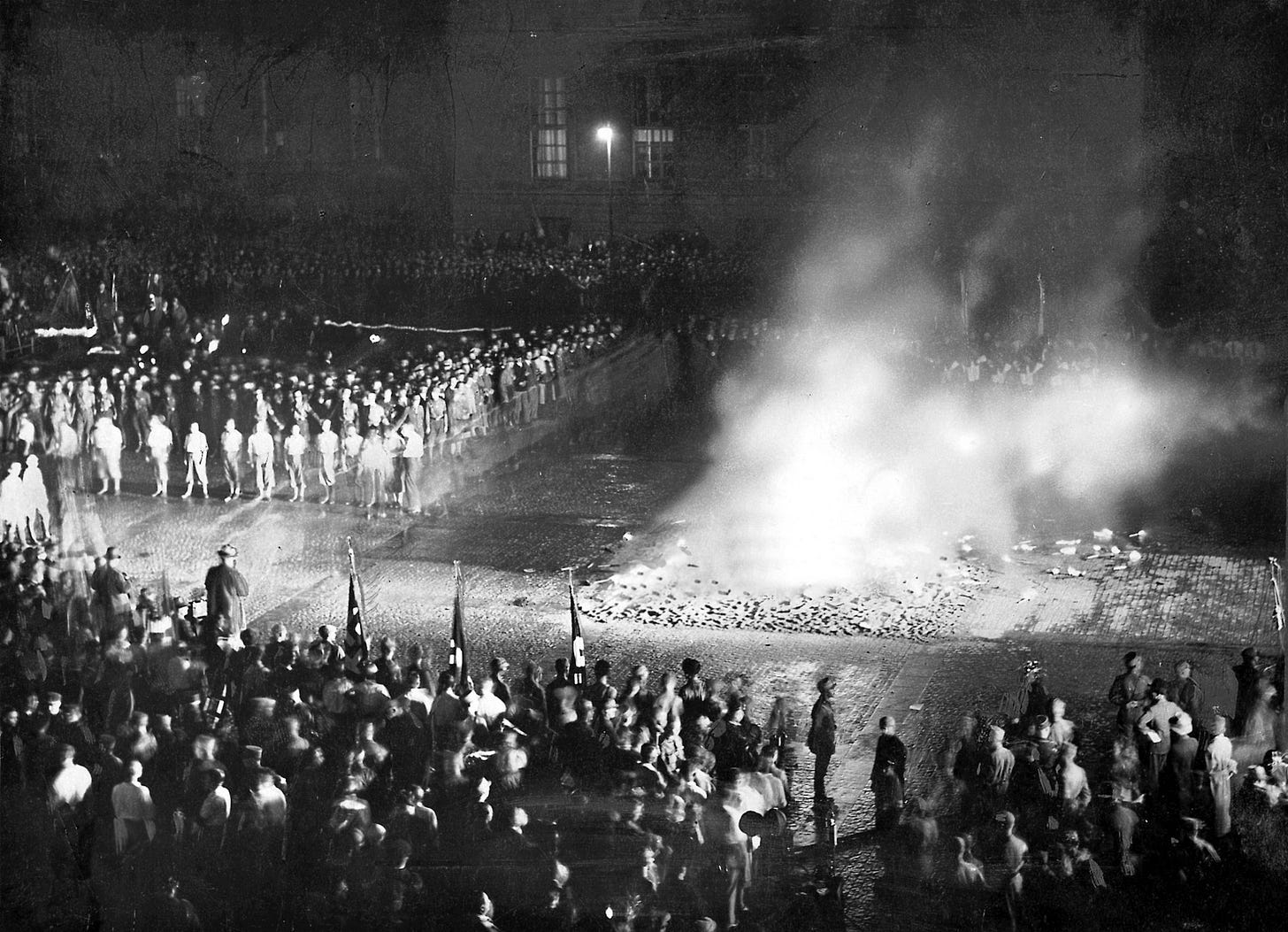
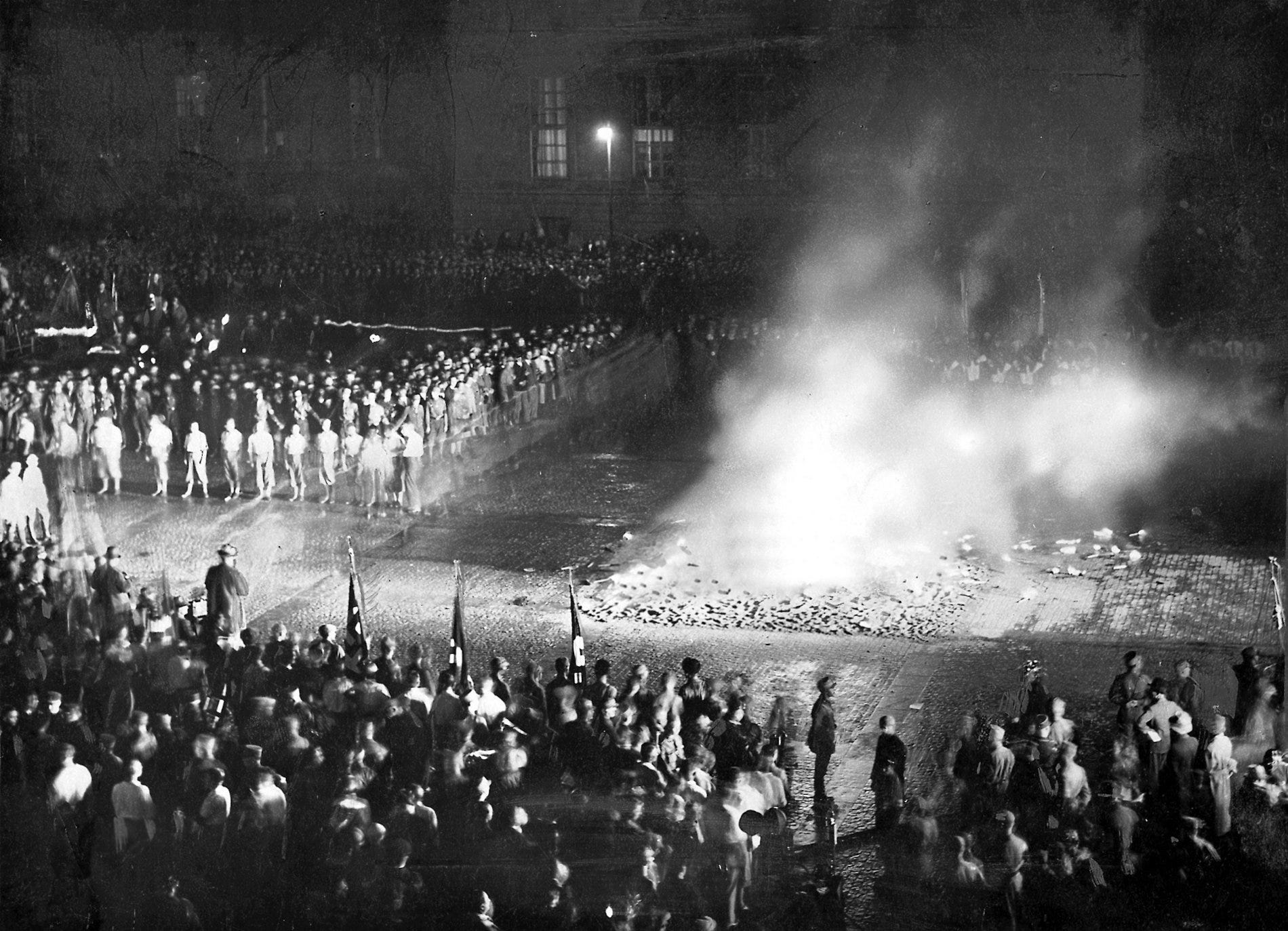
Nazi book burning, 1933 10. Fascism is anti-intellectual. Fascists view universities as degenerate sites of reflection and heap contempt upon intellectuals as effete, feminized thinkers. Because the assault on thinking is also an assault on truth, fascism erodes the distinction between reality and myth, feeling and intellect, spectacle and fact. “We have created our myth,” wrote Mussolini, “The myth is a faith, it is passion. It is not necessary that it shall be a reality…. . Our myth is the Nation, our myth is the greatness of the Nation! And to this myth, to this grandeur, that we wish to translate into a complete reality, we subordinate all the rest.”
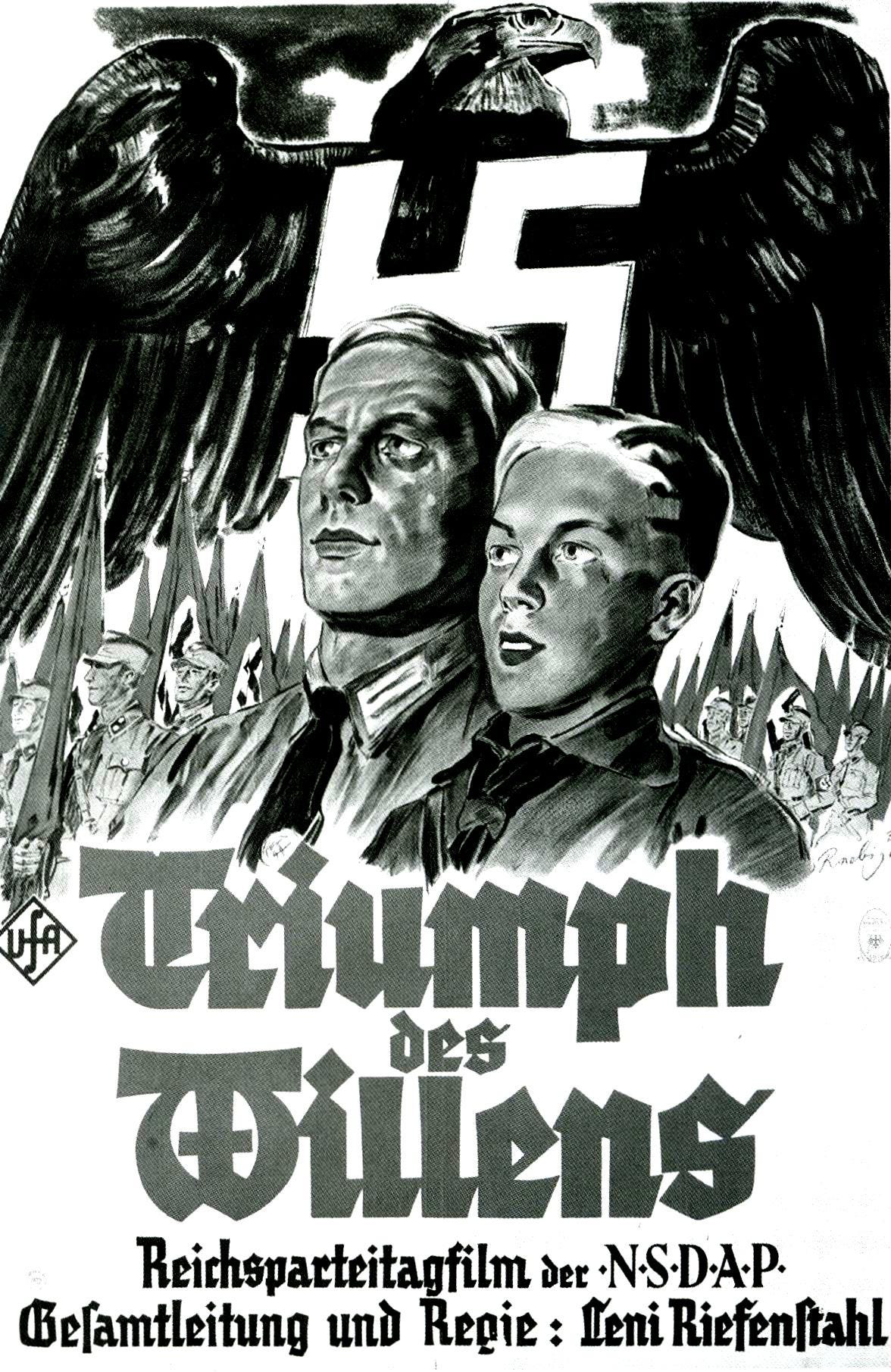
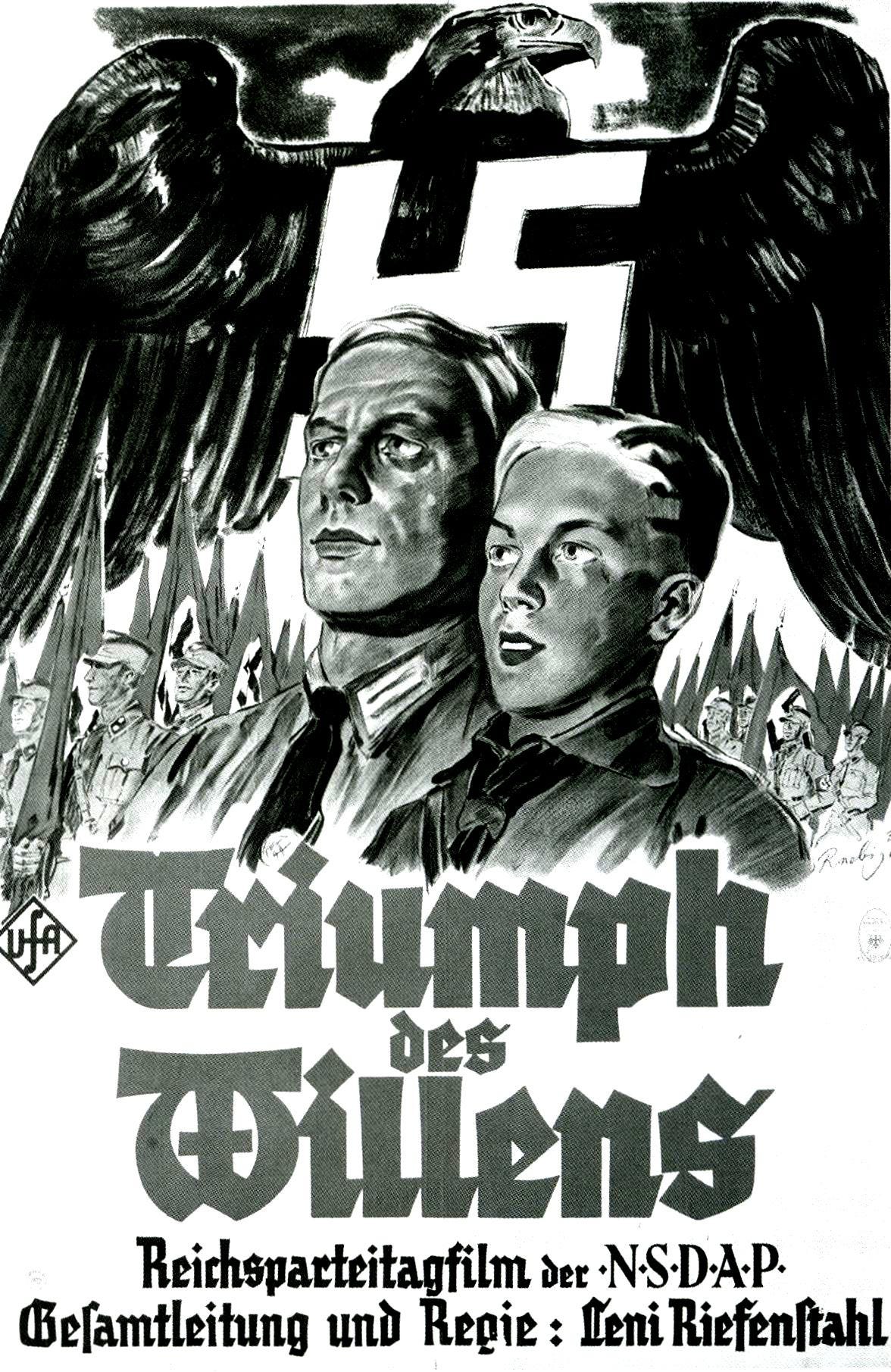
Poster advertising The Triumph of the Will 11. Fascism is wedded the aesthetics of power—smart uniforms, spectacular rallies (as immortalized, for instance, in Leni Riefenstahl’s The Triumph of the Will) monumental architecture, torchlit parades, music and song, are all part of the fascist mystique. Mussolini, who thought of his fascist regime as the Roman empire reborn, both renovated ancient Roman buildings and promoted lavish building projects that referenced the glories of the Roman empire.
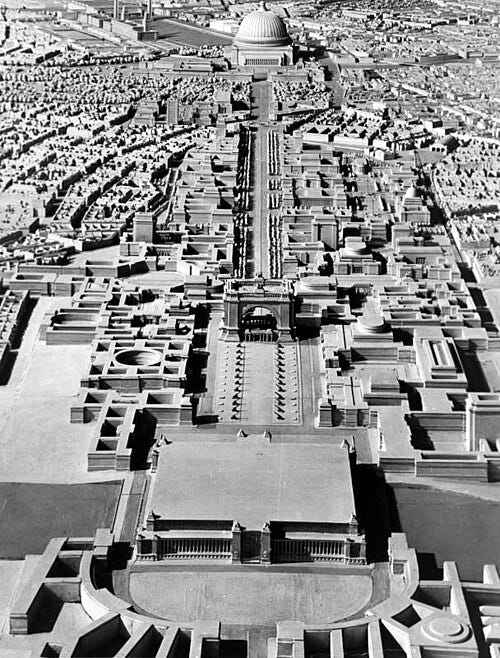
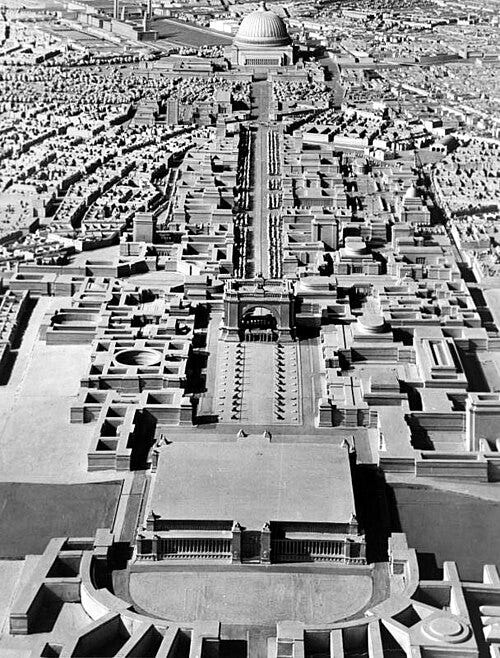
Model of hitler’s Germania, with the Triumphal Arch in the middle ground and the Hall of Glory at the rear 12. The fascist aesthetic is grandiose. Everything is larger than life. Hitler was no mere leader. He was the inspired prophet and architect of a thousand-year Reich. Johann Chapoutot observes: “The time was “historic.” Nazi discourse was fond of hyperbole and bragging. Judging by the texts, speeches, pictures, and films, everything was “historic,” “unique” (einmalig), “gigantic,” “decisive” (entscheidend), and so on, ad nauseam.” Hitler’s plan for his new capital included a huge triumphal arch that would dwarf the Arc de Triumph in Paris, and envisaged an immense, domed Hall of Glory so large that his architect Albert Speer feared that when filled with people the humidity exuded from their bodies would cause rain to fall inside the building.
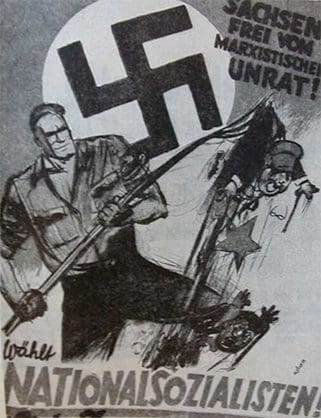
So, what do you think? How does MAGA stack up?
My Substack newsletter is free, becausthe topics that I write about are too urgent to hide behind a paywall. If you think that my work is worth supporting, and want to help support it, I am immensely grateful for paid subscriptions.
Americania
Mr. Man: I create our myth. The myth is a faith, it is passion. It’s not necessary that it’s real. Our myth is the Nation, our myth is the greatness of the Nation! And to this myth, to this grandeur, that we translate into a complete reality, we subordinate all the rest.
Everything is larger than life. Mr. Man is no mere leader. He is the inspired prophet and architect of a thousand-year regime. The time is historic, his ruling is unique, his ideas are gigantic and decisive.
enlightening historical analysis