
On Pogroms
Gender, Mob Violence, and the Logic of Race

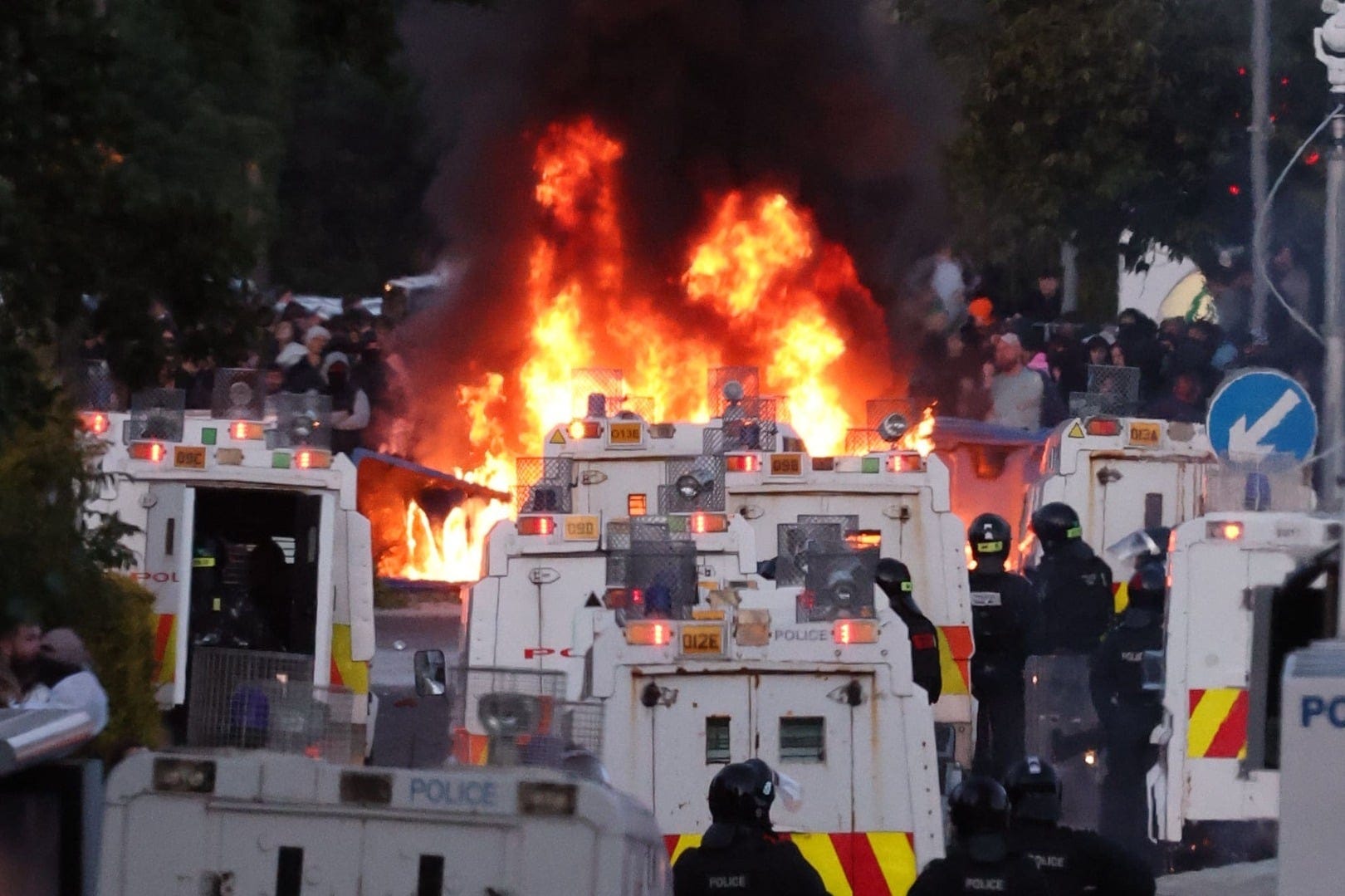
This week, Belfast erupted in an orgy violence, as marauding gangs, egged on by far-right influencers in Britain and abroad, attacked immigrants—or rather people whom they regarded as immigrants—that is, people whose skin has a darker hue than the average resident of Northern Ireland. Victims’ homes were set on fire, with whole families huddling inside for safety. Police intervened, clad in riot and armed with water canons, only to have projectiles hurled at them.
This xenophobic fury was sparked by a knife attack on an Irish man by Hadi Alodid, a Sudanese refugee. The Guardian newspaper reported, “The stabbing happened at about 10.30pm on Monday outside a block of flats in north Belfast. Video shared on social media showed a man straddling another man on the ground and striking at his head and neck. A kitchen knife was recovered from the scene. The victim, Stephen Ogilvie, in his 40s, lost his left eye and had deep lacerations to his face.”
Although it was just one man who committed this vicious crime, the mob’s fury targeted anyone and everyone marked by their appearance, language, or attire, as racially other.
It was a pogrom.
The word “pogrom” is Russian for “wreaking havoc,” and refers to attacks on “alien” communities. It was first used to describe attacks on Jewish communities in the Russian Empire during the late 19th and early twentieth centuries. It was one such assault that moved my family to to seek safe haven in the United States. My maternal great grandparents, Benjamin and Rivka Eskin, along with their eight children, arrived at Ellis Island in the fall of 1906, with little more than the clothes on their backs. They had fled the city of Gomel (also spelled “Homel”), in present-day Belarus.
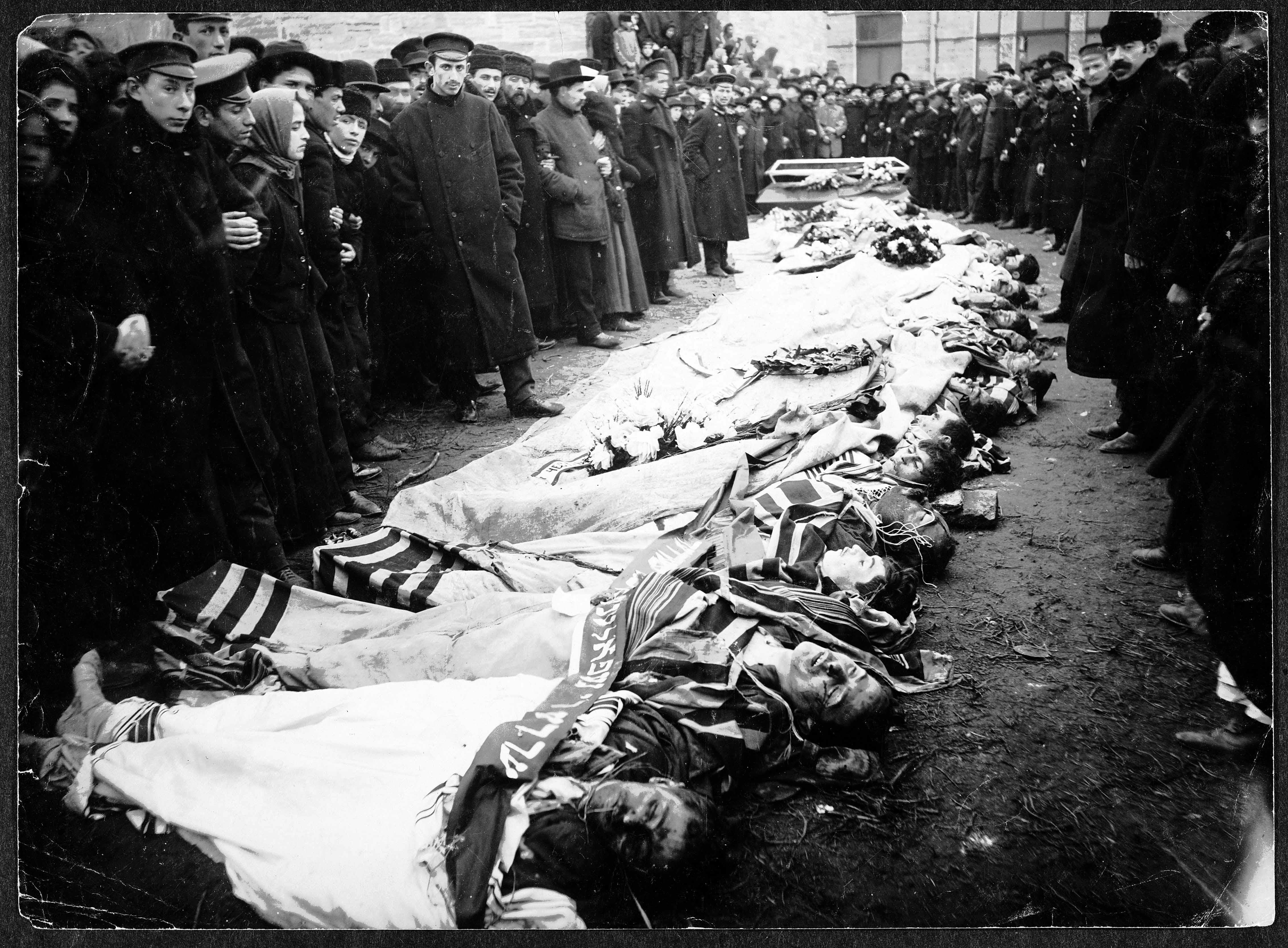
There had been a pogrom in Gomel in 1903. According to the Jewish Encyclopedia:
Anti-Jewish outbreaks occurred in Gomel in Sept., 1903. Rumors of impending riots had been circulated in the latter part of the previous month. The trouble arose on Friday, Sept. 11, when a watchman wished to buy from a Jewish woman a barrel of herring worth six rubles for one ruble fifty copecks. In the fight which followed between the Jewish peddlers of the market-place and the Christians who came to the aid of the watchman, one of the Christians was injured and died the same day. The riot was renewed on the following day, and when it had been quelled the town was practically under martial law. Meanwhile a number of anti-Semitic agitators, probably executing the orders of the authorities, inflamed the passions of the mob, exhorting them not to leave their fellow Christians unavenged. On Monday, Sept. 14, about 100 railway employees gathered and began to break the windows and to enter and plunder the houses of the Jews in the poorest quarters of the town, one of which is called "Novaya Amerika" ("New America"). A number of Jews armed and began to defend themselves, but the soldiers prevented them from entering the streets where the plundering was going on, and forced them back to their homes, beating and arresting those who resisted. According to a reliable report, other soldiers and the police looked on in an indifferent way while the mob continued its plundering and committed all kinds of excesses. The shrieks of children could be heard in the streets which the soldiers had blocked against the Jews without; and when some of the Jews tried to force their way down the side-streets, the soldiers fired on them, wounding several among them and killing six….The total number of Jews killed is given as 25; seriously injured, 100; slightly injured, 200. Three hundred and seventy-two Jewish houses and 200 stores were plundered and destroyed.
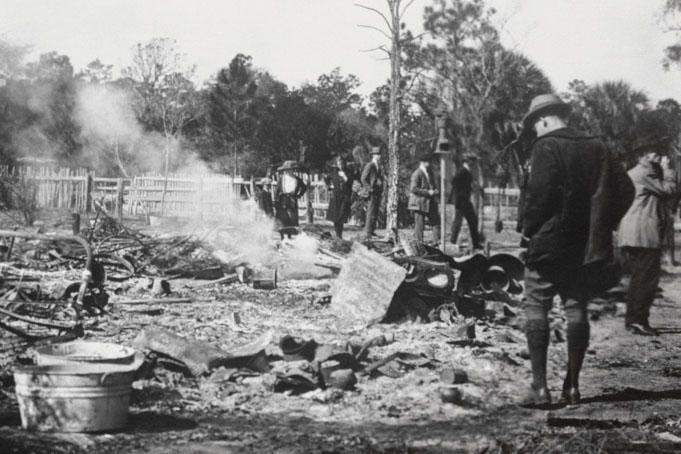
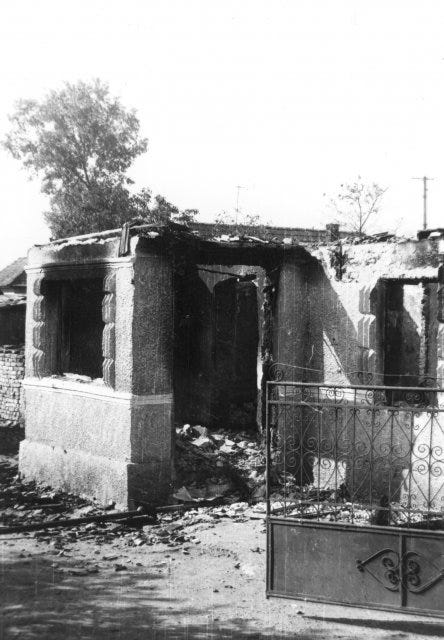
There have been many pogroms since then. One was in Rosewood, Florida, in 1923. It was sparked by the false accusation by Fannie Taylor, a “White” woman, that she had been assaulted by an escaped African American convict. More than two hundred men attacked the African American town Rosewood, Florida. They killed dozens of its residents—women, men, and children—and burned the whole town to the ground.
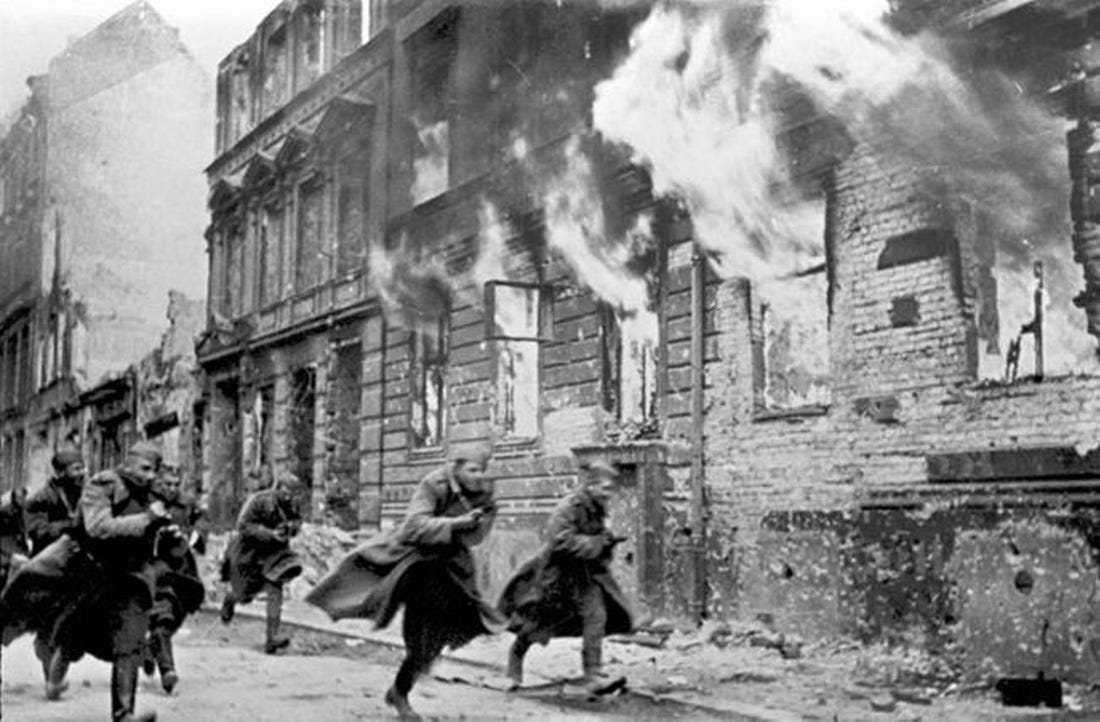
The best-known pogrom is the Kristallnacht pogrom (the “Night of Broken Glass”), which convulsed Germany, Austria, and the Sudetenland in November, 1938. It was ignited by a homicide.
A seventeen-year-old Jewish boy named Herschel Feibel Grynszpan, a stateless person illegally living in France, lethally shot German diplomat Ernst vom Rath five times in the stomach. Grynszpan was stateless because Polish Jews, including his parents, had been expelled from Germany by the Gestapo. But because Poland had also stripped them of their citizenship, they were in limbo, confined to a makeshift concentration camp cobbled together just across the Polish border.
The Nazi state was quick to take advantage of the situation by orchestrating a mass pogrom, falsely presented as a popular uprising, in which Jewish homes and businesses were vandalized, over a thousand synagogues were set on fire, and twenty-six thousand Jewish men were hauled off to concentration camps.
In 1993, a pogrom erupted in the town of Hadareni, Romania. Like this week’s Belfast pogrom, this one began with a stabbing. During an altercation, a Roma man stabbed a local non-Roma man. He and two others fled into a nearby house, while a six-hundred strong mob gathered outside, armed with pitchforks, whips, sticks, and other makeshift weapons. The house was doused with gasoline and torched. Two of the men were clubbed to death while trying to flee. A third was burned alive. Their bloodlust not yet sated, the crowd made the rounds of Roma homes, setting fire to at least thirteen of them and vandalizing four more.
You may have noticed a pattern in these four examples. It is not exceptionless, but it is very robust. Pogroms are triggered when a racialized male commits a real or imagined violent act against a member of the dominant group.
Here’s a puzzle. Pogroms are collective. They target entire communities. Why does rage against an individual perpetrator trigger violence against a whole group? Why, if an individual perpetrator is the object of their wrath, does the mob extract vengeance on innocent bystanders—men, women, and children who have done nothing wrong?
The answer lays in the logic of race.
When a group of people is racialized, every member of the group is assumed to possess a racial essence that makes them a member of a subordinate race. The racial essence is imagined to be an inherent, unchangeable fact about them, located in their “blood” or in their genes.
When a group is racialized in this way, it is almost always the case that the racial essence is supposed to include a disposition to criminality and violence—in other words, members of the racialized group are supposed to be essentially criminal. Jews, Blacks, and Romani people, as well as many others, have been tarred with this brush by their persecutors.
The belief that members of a racialized group are essentially criminal is compatible with they’re never having committed a criminal act. Such people “have it in them” to behave criminally, but whether they actually do so is immaterial in the eyes of their racist overlords. According to the compelling fiction, the disposition is there, simmering right below the surface, poised to burst out if given half a chance.
Because all of the victims of pogroms are deemed to possess a criminal racial essence, they are fungible in the minds of their persecutors. The locus of their criminality is not in what they do. It is in who they are. Their crime is, to paraphrase the title of Michael Berkowitz’s book about the Nazi criminalization of Jews, the crime of their very existence.
very well written, as always, thank you
The individual (of a certain kind) is the group. It's almost like they are all one biological individual. The usual social vandals did not say or organize their people to respond to the racialized White perpetrators who recently committed assaults and murders.