
The Unknown Freud
For his 170th birthday

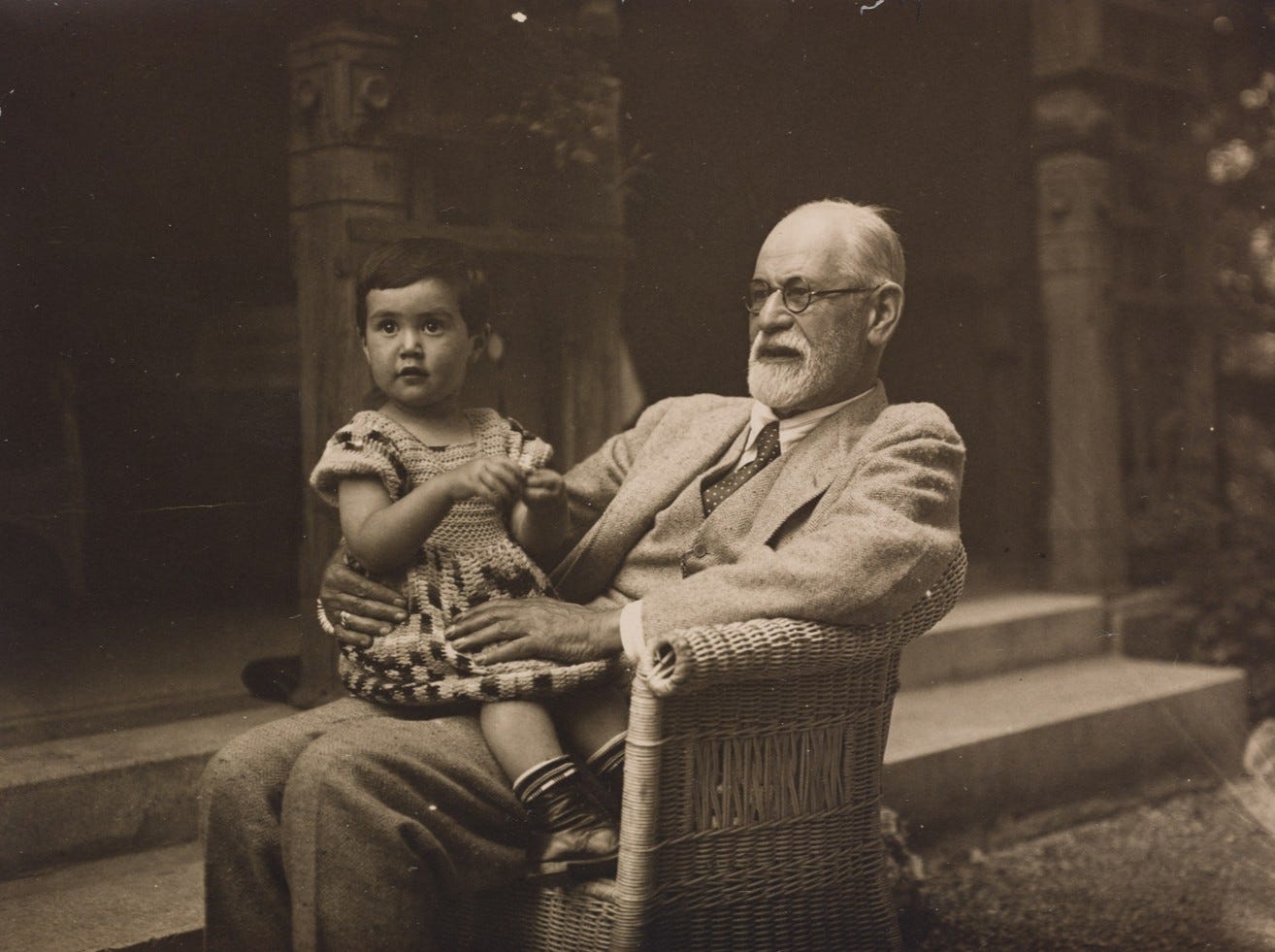
One hundred seventy years ago today, Shlomo Freud was born in an apartment above a blacksmith in Moravia (now the Czech Republic). Shlomo was his Jewish name, his Christian name was Sigismund, which he later changed to Sigmund.
I like to write about Freud because he has been one of the main intellectual influences on my life and work (the others are the philosopher Ruth Millikan, my maternal grandmother Bertha Eskin [née Firester], and my spouse Subrena Smith).
Before transitioning to philosophy, I was a psychoanalytic therapist, trainer, and supervisor of trainee psychotherapists working with children in some of the most impoverished areas of London. And when I undertook graduate study at the University of London, Kings College, my research focussed on Freud’s philosophy of psychology. My thesis was eventually published as a book titled Freud’s Philosophy of the Unconscious. Back in those days, my publications were all about Freud and psychoanalysis.
The title of this piece is somewhat misleading. What I will say about Freud’s work isn’t strictly-speaking unknown. It’s just unknown to people with only a superficial knowledge of Freud’s oeuvre. This includes many if not most psychologists, for whom mentioning the name “Freud” is tantamount to waving a red flag in front of a bull.
I am often horrified by what those of my students who are psychology majors have been told about Freud—stuff that is wildly inaccurate. And it’s not just limited to what the professors say. It’s astounding how many errors can be squeezed into the token three pages on Freud in the Introduction to Psychology textbook.
So, I want to spend a few moments discussing things that people either generally get wrong about Freud, or else are utterly unaware of.
Freud held that all cognition is unconscious. Psychologists like to claim that their version of the unconscious is very different from Freud’s, because, unlike Freud, they think of unconscious processing as cognitive. This is spectacularly ignorant. Freud argued that all cognitive processing is unconscious and that, strictly speaking, there is no such thing as conscious thinking. So-called conscious thought is just the output of unconscious mental processing.
Freud denied that there are repressed emotions. Freud held that what we call emotions have two components: a state of physiological arousal and a cognitive component that specifies what the feeling is about. The cognitive component can be barred from consciousness, but not the state of arousal and its associated sensations. So, we can be unconscious of the meaning of our feelings, but not of the feelings themselves.
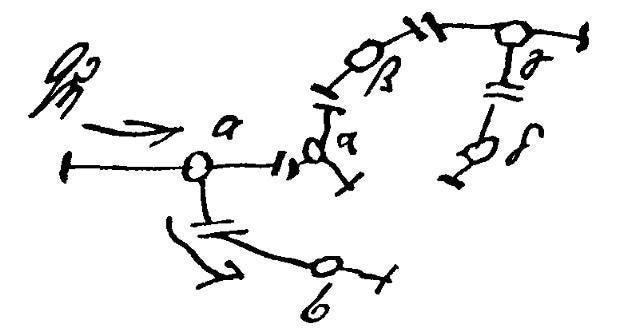
Freud had a theory of learning. Freud argued in 1895, in a manuscript that he titled “Psychology for neurologists,” that learning occurs through the modification of neural firing thresholds. This theory of learning is usually attributed to the psychologist Donald Hebb, who described it in a 1949 publication, but Freud got there more than half a century earlier. Even cooler, the learning algorithm for artificial neural networks, called “the backpropagation of error” is based on Freud’s learning theory, as is specified by it’s creator Paul Werbos.
Freud’s theory of dreams is consistent with our best neuroscientific accounts. I often hear from my psychology students that neuroscience has proven Freud’s theory of dreaming wrong. That’s incorrect. As the psychoanalyst/neuroscientist Mark Solms has shown, the best recent neuroscientific work on dreaming vindicates Freud to a remarkable degree.
Freud’s method of dream interpretation is not based on interpreting the meaning of symbols. The idea that Freud proposed that we treat each element of a dream as a symbol of something else is incorrect. Symbol interpretation has a very minor role in Freudian dream interpretation.
Freud was a physicalist. From the spring of 1895 onward, Freud held that all mental processes are processes occurring in a physical organ, the brain. This was an unusual stance to take at the time, as physicalism didn’t really become common until the middle-to-late twentieth century.
Freud did not claim that children want to “have sex” with their parents. One of my students once told me that when she asked her psychology professor about Freud, the prof said, “Freud said that little kids want to have sex with their parents. Disgusting!” This is an egregious error. Freud saw sexuality through a developmental lens. It is only post-pubertal sex that aims at intercourse. He called this “genital sexuality.” Earlier, “infantile” forms of sexuality are different. They involve different, childish ways of getting physical pleasure.
Freud did not disbelieve patients who told him that they had been sexually abused. There is a great deal of solid scholarship on this, much of it by people hostile to Freud. The truth is that Freud, in his early years as a psychotherapist, tried to force his patients to believe that they had been sexually abused, and they denied it. Freud never owned up to his own clinical abusiveness.
Freud did not talk about the “subconscious.” The term “subconscious was used by people who believed that seemingly unconscious mental phenomena are actually produced by a split-off or dissociated portion of consciousness. Freud adamantly disagreed with this. He did not believe in an “unconscious consciousness.”
Freud was not hostile to women and sexual minorities. In fact, he strenuously opposed attempts to exclude women and gay people from the psychoanalytic movement. Demographic information about European psychoanalytic refugees to the United States during the Nazi era demonstrate that there were many women analysts, contrary to what was the case for most professions during the 1930s.
These are just a few myth-busters. I could have given more.
Happy birthday to my homie, Sigmund Freud!
This Substack newsletter is free, because most of the topics that I write on are too urgent to be hidden behind a paywall. But if you think that my work is worth supporting, and would like to help support it, I am very grateful for paid subscriptions.
I wish you had written this during the semester. It would have been useful for my class.
But Freud's preconscious is one of our subconscious ideas? Of course it would be a shame if we 123 #1 gave every of his terms over to our felt need for progress 2 believed as he thought that every competent stimulous was recorded with us as if on magnetic tape3 folded his neurotic uncs into Jung's acceptance of Journeys into mysteries except: we are unlikely to be able to afford psychoanalysis. And we would like to have relationships in which our interpreter suspoends judgement like Freud did about the meaning of our images. Maybe the popular unconscious fixation is an acceptable abbreviation of "oddball characters allowed" and eccentricity permitted, since in the poverty of our public discourse property privacy and property and pleasure are collapsed into the idea of panic purchasing power. Freud made talking about neurotics, every one of us possible. I think Norman Brown shows that the death instinct does collapse rightfully into valuations, so if we are people who believe life might be friendly, and we want to constantly perform an attitude pointing to a friendly universe, then Brown said the pleasure principle still resembles Freud's pleasure principle if what he called masochisms and death instinct collapses into pleasure principle. Sigismund 170 and Rimbaud's his older, bigger billly goat brother brother. freud could have used the ideas of the speech acts what now you mention it, owe their idea to him.